Each year, up to 5 million people suffer from severe influenza infections worldwide. As traditional egg-based vaccines face production challenges, researchers are exploring new approaches to flu prevention.
Researchers at the University of Michigan developed a new method that could change how flu vaccines are produced and administered. However, before reviewing their proposed changes to the flu vaccine, it is imperative to understand how traditional flu vaccines work and are produced (American Chemical Society, 2026).
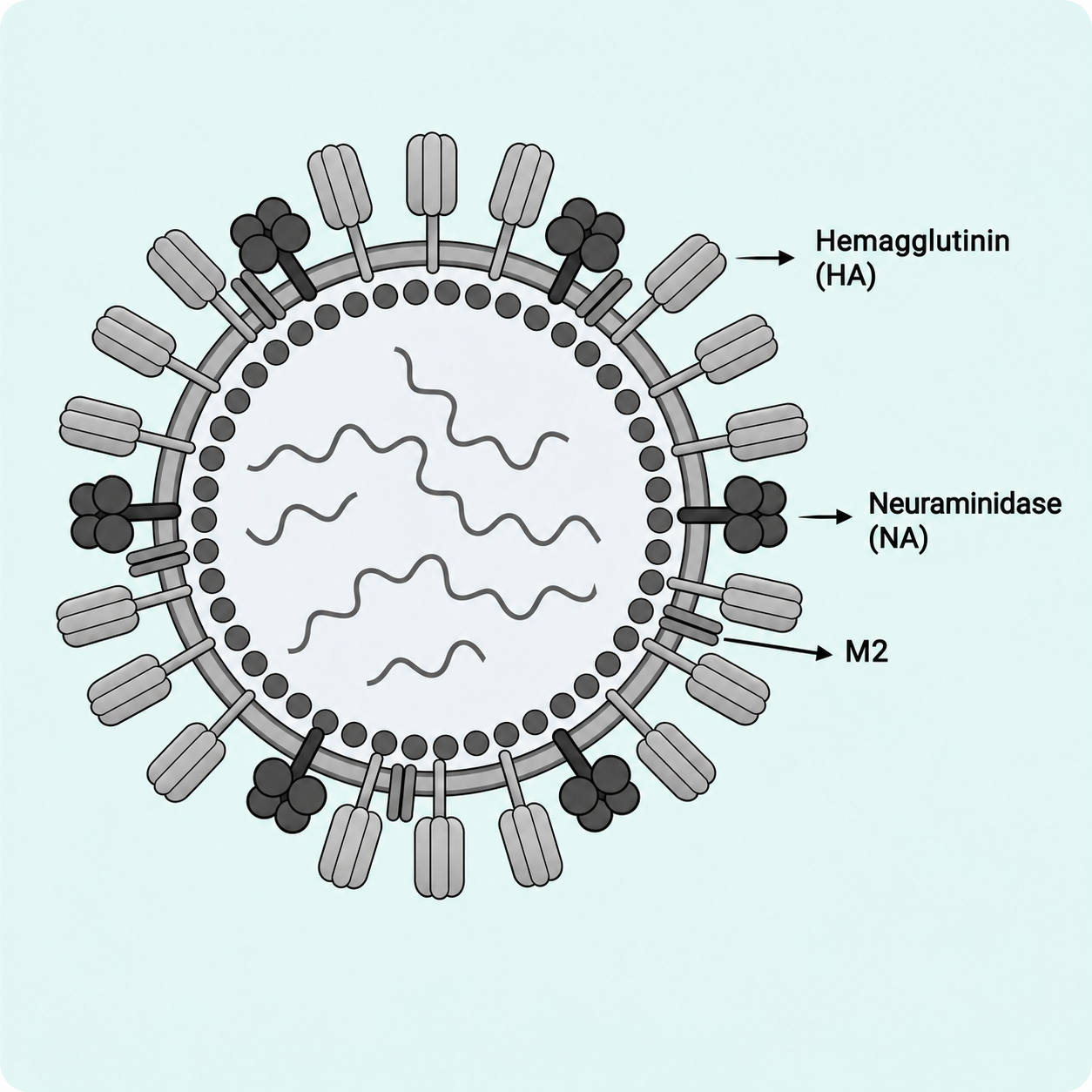
Figure 1: Influenza virus surface proteins
The influenza virus has three primary surface proteins (Figure 1): Hemagglutinin (HA), Neuraminidase (NA), and Matrix Protein 2 (M2), which is an ion channel (Bouvier & Palese, 2008). Traditional flu vaccines use HA to elicit an immune response. However, HA mutates rapidly, requiring flu vaccine redesign every year (American Chemical Society, 2026). Another drawback of traditional flu vaccines stems from their production methods. Traditional vaccines are manufactured in a process called egg-based vaccine production. In this production type, the manufacturers inject the flu virus into fertilised chicken eggs, and the virus replicates in the egg. Then, the viral fluid is harvested, the virus is inactivated, and prepared as a vaccine (CDC, 2026). However, as the virus replicates inside the egg, mutations that help the virus improve its adaptation to the egg occur. This is unfavourable for vaccine developers since the virus mutates beyond their control and the likelihood of a successful immune response is reduced (Wilson et al., 2017).
The team’s proposed vaccine uses M2 instead of HA. The main advantage of the M2 protein is that it has been relatively conserved for 100 years (meaning that it mutates less frequently than HA). Plus, it is highly conserved across human, swine, and avian influenza A strains (American Chemical Society, 2026). Therefore, the group postulates that the M2 vaccine can be protective against multiple influenza A strains, and it can save the industry from the burden of producing a new flu vaccine every year. In terms of the production of this vaccine, the team genetically engineered baker’s yeast to produce virus-like particles (VLPs) that display M2 but do not contain infectious material (American Chemical Society, 2026). The six-month production period required for egg-based vaccines has been reduced to one month with this new method that utilises baker's yeast (Michigan Engineering, 2026). Unlike the traditional flu vaccine, the new approach can’t elicit immunity against influenza B, as influenza B has a structurally distinct membrane protein, BM2, as opposed to M2 (Ashraf et al., 2024).
Thus far, the team conducted trials in mice. They vaccinated 18 mice, and blood serum collected from the mice contained abundant antibodies. Subsequently, the mice were exposed to 3 influenza strains, and the team concluded that all mice were protected (100% protection). Results of the mouse trials are promising. Nevertheless, before the human trials can begin, the duration of immunity in mice will need to be researched (American Chemical Society, 2026).
Ultimately, the new flu shot being developed by the University of Michigan has a high potential: it is produced faster, targets a significantly more stable viral protein, and does not need annual updates. However, it is too early to confidently claim that it will replace the traditional flu vaccine since human trials have not begun.
References
American Chemical Society (2026) Yeast-derived universal flu vaccine could someday replace yearly injections. Available at: https://www.acs.org/pressroom/presspacs/2026/august/yeast-derived-universal-flu-vaccine-replace-yearly-injections.html (Accessed: 16 October 2026).
Ashraf, M.A. et al. (2024) ‘A comprehensive review of influenza B virus, its biological and clinical aspects’, Frontiers in Microbiology, 15. doi:10.3389/fmicb.2024.1467029.
Bouvier, N.M. and Palese, P. (2008) ‘The biology of influenza viruses’, Vaccine, 26. doi:10.1016/j.vaccine.2008.07.039.
Centers for Disease Control and Prevention (2022) How influenza (flu) vaccines are made. Available at: https://www.cdc.gov/flu/vaccine-process/ (Accessed: 16 October 2026).
Michigan Engineering (2026) New flu vaccine protects mice against multiple strains. Available at: https://news.engin.umich.edu/2026/08/new-flu-vaccine-protects-mice-against-multiple-strains/ (Accessed: 16 October 2026).
Wilson, I., Wu, N. and Paulson, J. (2017) How flu shot manufacturing forces influenza to mutate, Scripps Research. Available at: https://www.scripps.edu/news-
events/news/20171030wilson/ (Accessed: 16 October 2026).
World Health Organization (2025) Influenza (seasonal). Available at: https://www.who.int/news-room/fact-sheets/detail/influenza-(seasonal) (Accessed: 16 October 2026).