The Winter Olympics showcase sport at its most extreme, where athletes perform in harsh and unpredictable snow and ice conditions. Success depends not only on skill but also on adapting to the environment. How can data-driven research help elite athletes prepare, train, and compete on ice?
To succeed in the Winter Olympics is the pinnacle of sporting achievement, and elite athletes face crushing pressure whilst undergoing years of intensive training. Due to the extreme nature of winter sports they must battle the variable conditions created by snow and ice, whilst still juggling the physical, cognitive, and technical demands of their sport.
Unlike many high-level sporting events, the Winter Olympics does not take place in a controlled environment. Frictional interactions melt frozen surfaces, meaning that conditions are unstable and will fluctuate between different races (Almqvist et al., 2026). Additionally, most events occur in the mountains, one of the most exposed environments on the planet, with a high risk of disruptive weather conditions and no guarantee of snow quality. The underlying unpredictability of the games is reflected in its high injury rate, reaching 17% in alpine skiing events (Zang et al., 2023).
Figure 1. Cortina D’Ampezzo mountains, the location of many of the events in the 2026 Winter Olympics, including alpine skiing, bobsleigh and curling (Martino Phuc, 2025).
Despite the challenging conditions, Olympic records are consistently being set with new, more complicated jumps performed. This year, at the Milano Cortina Winter games, there were nine new records. Notably, the male 500m speed skating event was completed in 33.77s, which is over ten seconds faster than the first Winter Olympics (International Olympic Committee, 2026). This raises the question: how do athletes navigate the harsh and variable environment of the games, whilst consistently testing the limits of speed and skill across all disciplines?
The solution can be seen through the huge steps in scientific and technological advancement taken over the past 100 years, with new data-driven strategies applied to coaching and training programmes. Development of new research based models and frameworks is constantly driving scientific and therefore sporting progress.
One example of recent research that can be directly applied to performance improvement is a study analysing the mechanics of ice-skating jumps. Over time, the amount of triple and quadruple jumps incorporated into routines has increased. This requires more rotation and therefore greater momentum, which was analysed across multiple jumps performed by high-level skaters. It was determined that the velocity of an athlete’s rotation is dependent on arm positioning whilst in the air, and it was suggested that by focusing training exercises on this specific element performance could be enhanced (Yamaguchi and Sakurai, 2025). This kind of evidence-based approach is highly beneficial, as it allows the most critical areas of technique to be targeted; maximising outcome and rate of improvement.
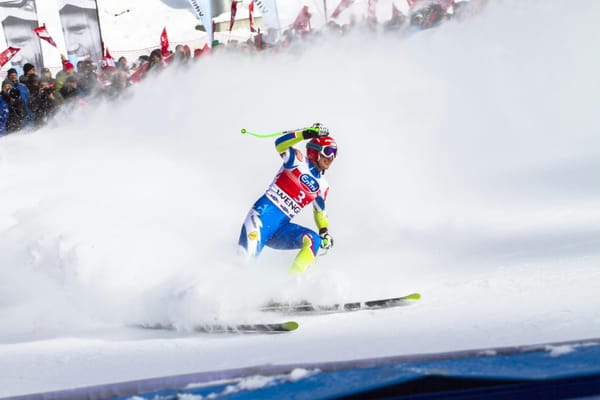
Due to its high-speed nature, small adjustments to technique can also have a huge impact on alpine skiing performance. To target problematic inefficiencies, an AI trajectory analysis tool was developed, using data from wearable sensors. It was designed to be implemented directly into coaching strategies, meaning it is durable in harsh environmental conditions and can be operated on smartphones so that rapid and accessible feedback can be given. When applied to slalom events, researchers determined that shorter trajectories did not always result in faster times, and that more efficient movements outweighed the effect of path length. This highlighted the importance of biomechanical execution, for example optimising body position, and further demonstrated the critical role data-driven coaching plays in athlete performance (Brus and Cătană, 2026).
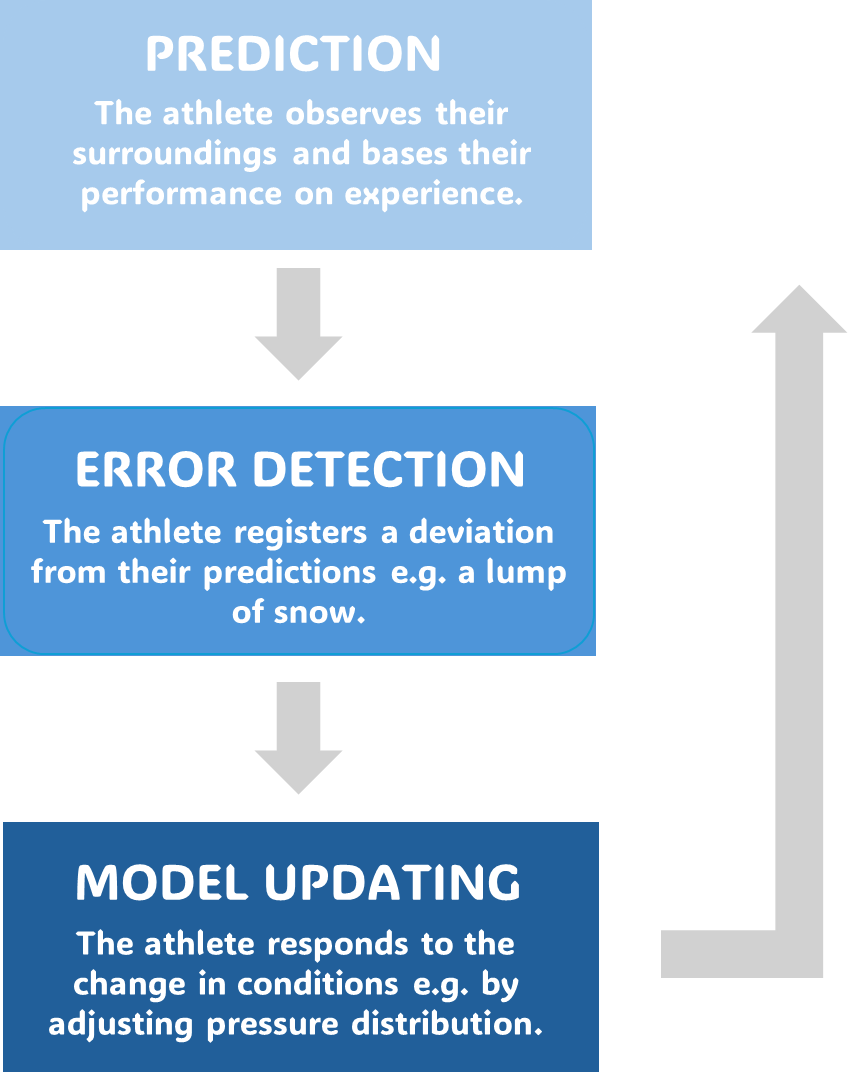
In addition to the importance of developing technical elements, there is increased focus in new research on cognitive influence. Researchers have created a framework to inform training strategies for alpine skiers by linking the functions of the brain and body together. They focused on a key skill linked to performance, known as ‘updating’, where athletes, particularly in variable environments subject to course changes, must take in sensory information and apply it to a motor command, like adjusting pressure distribution. This pattern of prediction, error detection and model updating can be developed by focusing coaching on terrain specific drills, working alongside the brain's natural processes to enhance traditional techniques (Boraxbekk, Supej and Holmberg, 2026).
Figure 2. Flow chart demonstrating the updating pattern used by athletes when responding to environmental changes.
Although the field of sports science is defined by constant development, there are many challenges associated with progress. Innovation must be balanced with the Olympic rulebook and is confined to strict equipment regulations. There is also huge pressure to keep up with rival teams, particularly as AI tools are now improving access to data informed feedback. Dr von Schleinitz, a former luge athlete and engineer involved in elevating Olympic performance emphasised the pioneering role of research in sports success and stated that: ‘If you are not improving, then you will be overtaken by the competition. You always have to move.’ (Communications Engineering, 2026). This drive for improvement, alongside current developments, points towards new records at the next Winter Olympics, with technological advancement at the forefront of a new era of sporting progress.
Bibliography
Almqvist, A. et al. (2026) “Technology on Snow and Ice: Innovation, Monitoring, and Performance for the Olympic Winter Games Milano Cortina 2026,” Scandinavian Journal of Medicine & Science in Sports, 36(2), p. e70218. Available at: https://doi.org/10.1111/sms.70218.
Boraxbekk, C.J., Supej, M. and Holmberg, H.C. (2026) “Cognitive Neuroscience in Alpine Skiing: Introducing Computational Sports Medicine for Performance Optimization,” Scandinavian journal of medicine & science in sports, 36(1), p. e70188. Available at: https://doi.org/10.1111/sms.70188.
Brus, D.I. and Cătană, D.I. (2026) “Wearable Biomechanics and Video-Based Trajectory Analysis for Improving Performance in Alpine Skiing,” Sensors, 26(3), p. 1010. Available at: https://doi.org/10.3390/s26031010.
Communications Engineering 2026 5:1 (2026) “Going for gold: engineering success in elite winter sports,” 5(1), pp. 31-. Available at: https://doi.org/10.1038/s44172-026-00609-4.
Martino Phuc (2025) “Cortina D’Ampezzo Mountain Italy” Available at: https://pixabay.com/photos/cortina-dampezzo-mountain-italy-9307295/ (Accessed: March 9, 2026).
Olympic Speed Skating | Milano Cortina 2026 Winter Olympics. Available at: https://www.olympics.com/en/milano-cortina-2026/sports/speed-skating?displayAsWebView=true%2Ctrue (Accessed: February 26, 2026).
Yamaguchi, M. and Sakurai, S. (2025) “Comparisons of angular momentum at takeoff in six types of jumps in women’s figure skating,” Frontiers in Sports and Active Living, 7, p. 1597598. Available at: https://doi.org/10.3389/fspor.2025.1597598.
Zang, W. et al. (2023) “Exploring the Epidemiology of Injuries in Athletes of the Olympic Winter Games: A Systematic Review and Meta-Analysis,” Journal of Sports Science & Medicine, 22(4), p. 748. Available at: https://doi.org/10.52082/jssm.2023.748.