By Ellie Wheeler
“Her enthusiasm, her willingness to be vulnerable, speak about her family, and be involved in drawing attention – even as dementia has ravaged her – has aided research considerably… Alzheimer’s won’t have the last word. We’ve not given up, we’ve fought it all the way.” - Stuart Jennings (Alzheimer’s Society, 2023)
When scientific breakthroughs are remembered, it is usual to think of the researchers, laboratories, Nobel winners - the faces of scientific breakthroughs. Yet behind many such advances is the collaboration between scientists and the people who lived the experiences researchers strive to solve.
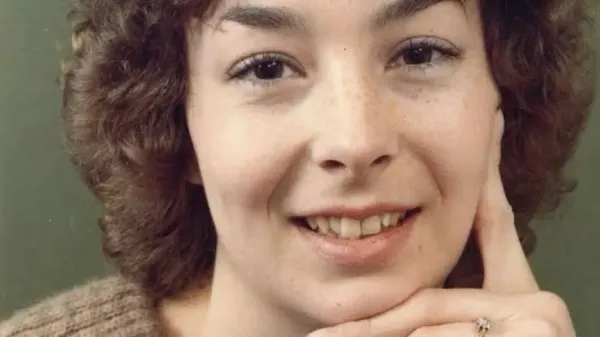
In the early 1980s, Alzheimer’s was primarily regarded as a disease of old age. The cellular and molecular origins of the disease were poorly defined and the role of inherited mutations still uncertain. Within one family in Nottingham, however, a different pattern was being noticed. Carol Jennings, a school teacher at the time, observed that her father and four of his siblings were diagnosed with Alzheimer’s disease within a three year period, all between 54 and 58 years old (Welle, 2024). Struck by this pattern, Jennings documented her family history and responded to an advertisement placed by geneticist Professor John Hardy in the Alzheimer’s Society Newsletter, seeking families with multiple cases of dementia - Jennings was the first person to put herself and her family forward (Alzheimer’s Society, 2023).
This correspondence led to a long-term research collaboration at University College London. Jennings recruited more members of her family, rallying them to be involved in the study, amounting to 39 relatives providing blood samples for genetic analysis. Through this analysis, Professor Hardy and his team identified a causative point mutation in the amyloid precursor protein (APP) gene, found on chromosome 21. The identification of this mutation was a significant breakthrough in Alzheimer’s research, demonstrating that the disease was not simply a symptom of old age. This breakthrough established that children of individuals carrying the mutation have a 50% chance of inheriting it themselves, clarifying patterns of autosomal dominant inheritance and enabling more accurate genetic counselling and earlier diagnostic assessment. This finding contributed directly to the development of the amyloid cascade hypothesis, a mechanistic framework which defined Alzheimer’s research for decades (Mcintosh, 2022; Hardy, 2017). Building on this initial genetic discovery, researchers have progressively refined the model to incorporate tau pathology, neuroinflammation, and vascular contributions, significantly advancing understanding of not only Alzheimer’s disease but of neurodegenerative diseases more broadly.
Jennings underwent annual MRI scans and lumbar punctures over 25 years for research, and encouraged her children to join the same studies as well as to donate their brains to science in the future (Welle, 2024). However, her contributions went far beyond donating medical samples. Together with her husband Stuart, she later became Vice-President of the Alzheimer’s Society, advocating for sustained funding and greater awareness of dementia research. Through presenting their family’s story at conferences and research events, they built a community for patients, and fostered relationships between research institutions and affected families (Alzheimer’s Society, 2023).
In 2012, Jennings was formally diagnosed with Alzheimer’s disease at age 58 which was followed by a decline in her health. Her final wish was to donate her brain and spinal cord to research after her passing in 2024 at age 70, reflecting her life-long commitment to Alzheimer’s research (Welle, 2024). Jennings’ contributions to the field are incalculable, and live on in her legacy of the Alzheimer’s society she supported, the fellowship established in her name to fund new dementia research, and her loving family. Driven by the love of her family, Carol Jennings transformed her private worry into public contribution, reminding us that science is not only built upon evidence, but sustained by compassion.
Bibliography:
Alzheimer’s Society. (2023). Honouring a couple affected by dementia for their contributions to dementia research. [online] Available at: https://www.alzheimers.org.uk/blog/honouring-couple-dementia-their-contributions-research [Accessed 21 Feb. 2026].
Hardy, J. (2017). The discovery of Alzheimer‐causing mutations in the APP gene and the formulation of the ‘amyloid cascade hypothesis’. The FEBS Journal, [online] 284(7), pp.1040–1044. doi:https://doi.org/10.1111/febs.14004 [Accessed 21 Feb. 2026].
Mcintosh, E. (2022). Amyloid: 30 years of a breakthrough theory - Alzheimer’s Research UK. [online] Alzheimer’s Research UK. Available at: https://www.alzheimersresearchuk.org/news/amyloid-30-years-of-a-breakthrough-theory/ [Accessed 21 Feb. 2026].
Welle, E. (2024). Carol Jennings, whose family’s genetics informed amyloid cascade hypothesis, dies at 70. [online] The Transmitter: Neuroscience News and Perspectives. Available at: https://www.thetransmitter.org/alzheimers-disease/carol-jennings-whose-familys-genetics-informed-amyloid-cascade-hypothesis-dies-at-70/ [Accessed 21 Feb. 2026].