Rachel Carson and the roots of environmentalism
The American biologist and writer ignited a fiery backlash with her environmentalist writing, but is now recognised as a towering figure in modern ecology.
– 4 min read
The American biologist and writer ignited a fiery backlash with her environmentalist writing, but is now recognised as a towering figure in modern ecology.
By Sophia Das
“But man is a part of nature, and his war against nature is inevitably a war against himself.”
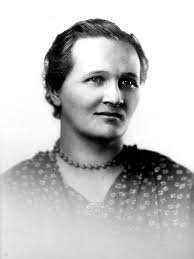
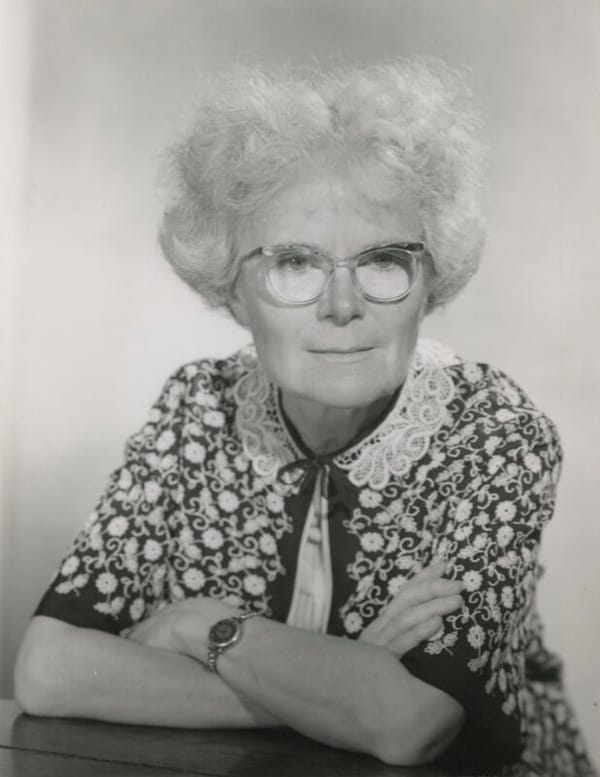
Rachel Carson, marine biologist and pioneer of the environmental movement, wrote these discerning words in Silent Spring (1962), foreseeing that man’s illogical destruction of the environment would inevitably come back to haunt him. Silent Spring was a ground breaking novel in many ways, not in the least that through the beauty of her prose, Carson was able to capture the general public’s interest in conservationism. However, she was not always an influential figure; her path towards national and international recognition was rife with financial and social hurdles.
From a young age, Carson’s love of both writing and nature were apparent. A native of rural Pennsylvania, she was a fan of literature and published her first story at age ten (Michals, 2015). After earning her master’s in zoology from Johns Hopkins, she was forced to abandon her pursuit of a PhD due to financial hardship, an issue that would plague much of her early career. Seeking out financial stability to support her family, Carson began to work for the U.S. Bureau of Fisheries (Ryerson, 2023).
During this period, Carson published a trilogy of novels about the sea, the most popular one being The Sea Around Us (1951). These works were very well received, and Carson was lauded for her combination of scientific depth and beautiful prose. Carson’s deep admiration towards nature would be the common interest underlying all of her work. The success of Carson’s first series of books allowed her to achieve her dreams of being a writer full time (Lear, 2019).
It was then that Carson turned her attention to the insecticide DDT (dichlorodiphenyltrichloroethane), a subject that had long interested her. The marine biologist had taken notice of the unwanted effects DDT had on wildlife, and began to investigate extensively into the topic. At the time, DDT was used widely in agriculture without consideration for its effects on the wider ecosystem (Boslaugh, 2016). Through the publication of Silent Spring (1962), Carson brought the use of pesticides into question for the first time. The author detailed how heavy pesticide use affected the natural world, and also directly challenged chemical companies claims about the safety of DDT. Carson demonstrated a rather radical point of view of the time by outrightly criticising the industry’s personal stake in the matter, and even questioning the government’s authority on environmental matters (Lear, 2019)
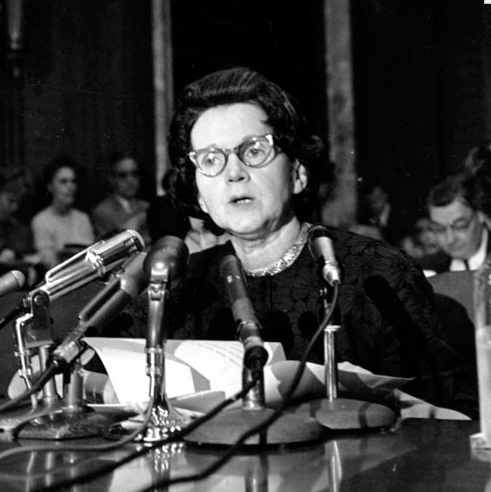
Very rapidly Rachel Carson faced an onslaught of attacks, mainly led by the chemical industry and their political allies seeking to discredit her and her statements. Seeking to protect profits, chemical companies threatened her with lawsuits and slandered her in the press. Carson was called a radical, an amateur, and most often, attacked by critics for being a woman (Stoll, 2020). One letter sent to the New Yorker remarked dismissively “isn’t it just like a woman to be scared to death of a few little bugs!” Interestingly, it was through these attempts to discredit Carson that greater awareness of her work was created. Silent Spring launched a markedly controversial issue that was only further provoked by political attempts to silence it (Boslaugh, 2016). Through it all and while battling breast cancer, Rachel Carson managed to turn the tide of public opinion, a testament to the power of her words. In 1972, ten years after the publication of Silent Spring and eight years after Carson’s death, the use of DDT was banned in the United States (US EPA, 2025)
A former US Secretary of Agriculture once asked “why this spinster without children was so concerned with genetics” (Boslaugh, 2016). Carson was interested in more than just her legacy, or the legacy of mankind. She did not believe that man had any right to the natural world, and in fact believed that humanity had a duty to admire and protect. It was because her profound love of nature moved her, that she in turn was able to create great change. The following environmentalist movements of the 1960s and 70s were heavily influenced by her work, as was the creation of the US Environmental Protection Agency (EPA) in 1970. More so than her direct impact, Rachel Carson stands as an important symbol of bridging the divide between the scientific community and the general public. Carson believed in her duty to educate the population, and through that was able to enact real change, in an unprecedented way. She showed the importance not only of accessible scientific communication, but also of one that is stirring.
References:
Boslaugh, S.E. (2016b). Silent Spring | work by Carson. In: Encyclopædia Britannica. [online] Available at: https://www.britannica.com/topic/Silent-Spring.
Lear, L. (2019b). Rachel Carson: The Life and Legacy. [online] Rachelcarson.org. Available at: https://www.rachelcarson.org/.
Michals, D. (2015a). Rachel Carson. [online] National Women’s History Museum. Available at: https://www.womenshistory.org/education-resources/biographies/rachel-carson.
Ryerson, J. (2023a). Rachel Carson (U.S. National Park Service). [online] www.nps.gov. Available at: https://www.nps.gov/people/rachel-carson.htm.
Stoll, M. (2020b). The Personal Attacks on Rachel Carson as a Woman Scientist. [online] Environment & Society Portal. Available at: https://www.environmentandsociety.org/exhibitions/rachel-carsons-silent-spring/personal-attacks-rachel-carson-woman-scientist.
Tikkanen, A. (2018b). Rachel Carson | American biologist. In: Encyclopædia Britannica. [online] Available at: https://www.britannica.com/biography/Rachel-Carson.
U.S. Fish & Wildlife Service (n.d.). Rachel Carson (1907-1964) Author of the Modern Environmental Movement, , U.S. Fish and Wildlife Service. [online] FWS.gov. Available at: https://www.fws.gov/staff-profile/rachel-carson-1907-1964-author-modern-environmental-movement.
US EPA (2025b). DDT - A brief history and status. [online] US EPA. Available at: https://www.epa.gov/ingredients-used-pesticide-products/ddt-brief-history-and-status.