Opening the Universe: How Dr Sheila Kanani Is Changing Who Science Is For
Following Dr Sheila Kanani MBE’s journey from the classroom to an EDI ambassador for science and space outreach projects.
– 5 min read
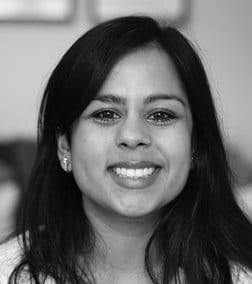
Following Dr Sheila Kanani MBE’s journey from the classroom to an EDI ambassador for science and space outreach projects.
By Natasha Miller
Dr Sheila Kanani MBE has shaped science stretching far beyond the lab bench or telescope. As a planetary physicist, she worked on Saturn’s magnetosphere using data from the Cassini spacecraft during her PhD at UCL’s Mullard Space Science Laboratory earning her a NASA Group Achievement Award, (Lancaster University, 2025; The Royal Astronomical Society, 2025). But what makes her stand out isn’t just the research, it’s how she’s taken that expertise and opened science up to children, underrepresented communities, and within institutions still learning what inclusion really means.
In 2022, Sheila was awarded an MBE for services to astronomy and diversity in physics, (Cabinet Office, 2021; Massey and The Royal Astronomical Society, 2021), a national recognition of her efforts to make science more inclusive, joyful, and human. Her career is a powerful reminder that shaping science isn’t only about discovery. It’s about who gets to be part of those discoveries.
After graduating from the University of Manchester in 2006 with a degree in Physics specialising in Astrophysics , Sheila’s early career included placements at Jodrell Bank and the Parkes telescope in Australia. But it was during her PhD that she realised she was just as excited about talking about science as doing it. She trained as a secondary school science teacher adopting a practical and hands-on approach, rooted in the idea that science should feel accessible, not elite (Lancaster University, 2025; The Royal Astronomical Society, 2025; Wikipedia, 2025).
Sheila has authored over a dozen children’s books, including Can You Get Rainbows in Space?, an award-winning World Book Day 2024 title, (The Royal Society, 2025), together with a series on influential women - from Michelle Obama to Amelia Earhart, (Penguin Books, 2025). She has also collaborated with the University of Cambridge and the European Space Agency on Mission to Mars and This Book Will Make You a Scientist. Her books don’t just explain science - they invite children to see themselves in it.
She’s also brought science to her hometown near Blackpool, helping organise a local festival with hands-on demos, slime-making, and even a walking dinosaur. “We had 2,000 people from the local area come,” she said. “A lot of people here can’t easily get to science centres in Manchester or Liverpool. So, bringing science to them - that was really cool.”
Changing the Culture of Science: EDI as Everyday Practice
From 2014 to 2024, Sheila served as the Education, Outreach and Diversity Officer at the Royal Astronomical Society embedding equality, diversity and inclusion (EDI) into the fabric of the institution’s work from grant-making to public engagement. She helped launch RAS200, a major initiative funding outreach projects reaching communities previously excluded, (The Royal Astronomical Society, 2025).
Sheila describes EDI as the part of her work that’s changed her the most:
“That’s the bit I was never formally trained in. I studied space and science, but EDI I’ve kind of self-taught - through experience. Now, whenever I teach or write, I think about inclusivity, about appealing to different audiences, and about telling stories from diverse backgrounds… I’ll look for stories from early Indian or Arabic astronomers or highlight the first women in space. And when I work with illustrators, I make sure the characters reflect the world we live in - different skin tones, genders, abilities. It’s about making sure everyone feels seen.”
She’s also worked on long-term projects tackling bullying and harassment in the space sector. “It’s frustrating how slow it is,” she admits. “But it’s simple, really - just be kind. That alone would make science more welcoming.”
How did your own education shape your understanding of inclusion in science?
“I’m a woman from an Asian background, but I also had a lot of privilege - I grew up in London, went to a girls’ school, and never felt like physics wasn’t for me. But university was a shock - very male-dominated. And choosing physics and space wasn’t really the ‘done thing’ in my community. I had to convince people that I didn’t need to do a vocational degree.”
Is there a moment that made you rethink what science outreach can achieve?
“One student I taught GCSE Astronomy to online during the pandemic had long COVID and couldn’t attend school. She emailed me recently to say she’s now going to university to study astronomy - and that she wouldn’t have gotten there without that course. It made me realise it’s not just about the subject - it’s about people, and the opportunities we create.”
If you could redesign one part of science education in the UK, what would you change first?
“I’d teach everything through the lens of space. It’s inspiring - you can use it to teach English, maths, geography, and history. But right now, there’s barely any space in the curriculum. Kids love space and dinosaurs - we should use that excitement before we lose them to traditional textbook learning.”
Your books reach children long before they encounter formal science. What responsibility do you feel when shaping those early scientific identities?
“At first, I didn’t think about it. But after meeting young readers, I realised I do have a responsibility. Now I’m really careful - the language, the stories, the illustrations. We make sure the characters are diverse, that the science is inclusive, and that no one feels left out. It’s about making sure kids see themselves in the story.”
To keep up with Dr Sheila Kanani’s work — from new book releases to science festivals and outreach projects — you can follow her on:
Whether she’s writing, teaching, or bringing science to new audiences, Sheila continues to show that science is for everyone — and that the universe is big enough for all of us.
Cabinet Office. (2021). New Year Honours List 2022. Available at: https://www.gov.uk/csv-preview/623308008fa8f504afb04f70/ny-honours-2022-spreadsheet.csv (Accessed: 5 February 2026).
Lancaster University. (2025). Sheila Kanani. Available at: https://www.lancaster.ac.uk/physics/about-us/people/sheila-kanani (Accessed: 5 February 2026).
Massey, R. and The Royal Astronomical Society. (2021). Dr Sheila Kanani awarded MBE. Available at: https://ras.ac.uk/news-and-press/news/dr-sheila-kanani-awarded-mbe (Accessed: 5 February 2026).
Microsoft Copilot (2026) Assistance with article drafting and structure. Microsoft. Available at: https://copilot.microsoft.com (Accessed: 5 February 2026).
Penguin Books. (2025). Dr Sheila Kanani. Available at: https://www.penguin.co.uk/authors/138890/sheila-kanani (Accessed: 5 February 2026).
The Royal Astronomical Society. (2025). Career case study: Sheila Kanani. Available at: https://ras.ac.uk/education-and-careers/career-case-study-sheila-kanani (Accessed: 5 February 2026).
The Royal Society. (2025). Royal Society Young People’s Book Prize goes to ‘Can You Get Rainbows in Space?’ Available at: https://royalsociety.org/news/2025/03/young-peoples-book-prize/ (Accessed: 5 February 2026).