Stellar Representation: Cecilia Payne and Her Legacy in Astrophysics
Recapping the life, struggles and achievements of Cecilia Payne-Gaposchkin. The first female professor at Harvard University.
– 3 min read
Recapping the life, struggles and achievements of Cecilia Payne-Gaposchkin. The first female professor at Harvard University.
By Lilly Kirven Magore
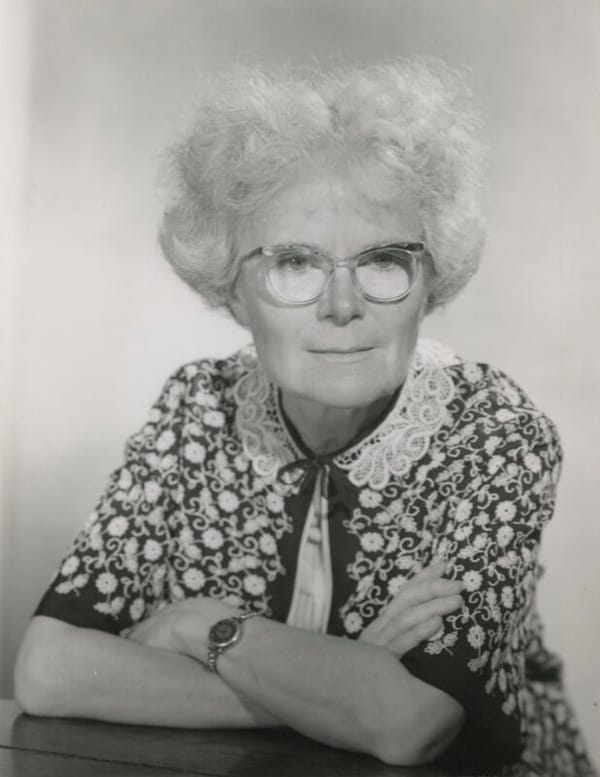
Cecilia Payne-Gaposchkin could be regarded as one of the founding fathers of astrophysics. Payne’s expedition into astronomy is a tale of ambition and perseverance. Consistently over-looked in her field, still, her undeniable intellect and quest for knowledge overcame any arbitrary boundaries in her way.
On a spring day in 1900’s Wendover, England, Cecilia Payne was born; a daughter amongst two brothers.A curious child, Payne was tutored in a wide range of subjects from a young age and followed her interests into boarding school. Here, she felt the scientific facilities and staff to be lacklustre and left much to be desired. When of age, Payne sought out better education by applying to Newnham College at Cambridge University to study botany (Harvard.edu, 2024).It was here that she attended a lecture by Sir Arthur Eddington, and listened as he described his research that proved Einstein's general theory of relativity. This one lecture was all it took for Payne to be ‘done with biology, dedicated to physical science forever’ (Aps.org, 2024). Thus began her journey into the emerging world of astrophysics. After 4 years of hard work at Cambridge she was not awarded a degree, as she was a woman. Unsatisfied with the opportunities for women scientists in the UK, she took her knowledge to Harvard University as a research assistant. The director at the observatory regarded Cecilia as more of a secretary than a scientist. Like most women in the observatory, she was plagued with dull tasks like calculations and measurements instead of being on the frontlines, exploring space. Payne refused to be overlooked and instead sought out a fellowship to gain funding for her own independent research (Aps.org, 2024).
Unlike her peers, Payne displayed a unique interdisciplinarity. Her previous study in plant biology defined her methodic approach to studying the stars and when analysing stellar spectra she united concepts from both physics and chemistry (Science History Institute, 2025). This intersection of disciplines , coupled with many grueling hours spent in the observatory, allowed Payne’s discovery of one of the most fundamental principles of stellar physics.
Concluding her graduate research, she submitted her thesis in 1925 titled: ‘Stellar Spectra: A contribution to the observational study of high temperature reversing layers in stars’. Payne hypothesised that the sun was mainly composed of two light elements (hydrogen and helium). Her thesis was initially rejected as the idea contradicted all previous science. At the time, there was a widely accepted belief that the earth and sun were alike in chemical composition (Gregersen, 2019). In 1927 Henry Norris Russel (the same colleague who originally rejected her results) obtained results in-fact confirming the conclusions from ‘Stellar Spectra’. Cecilia had been correct. This marks the first of many grand achievements for Payne, as she became the first woman to earn a PhD from Radcliffe College (Harvard University) (Gregersen, 2019).
After her remarkable contributions to her craft, Payne began working as an astronomer at Harvard in 1927. Despite her undeniable intellect, the Harvard president refused to award Payne professorship, instead dubbing her a ‘technical assistant’ and stated she ‘would never ascend to a Harvard professorship while he was alive’ (Science Museum Blog, n.d.).It wasn’t until 1956 that she etched her name into Harvard history and became the institution's first female professor and the first female head of any department (Gregersen, 2019).
Payne strived for greatness. She refused to settle for the mediocrity thrust upon her by society, even describing herself as ‘ a rebel against the feminine role’ (Science Museum Blog, n.d.). Backing herself again and again until finally the world caught up and recognised her for the star that she is. Cecilia Payne-Gaposchkin has left a legacy to remember and is a stellar role-model to all.
References