By Peggy Greenway
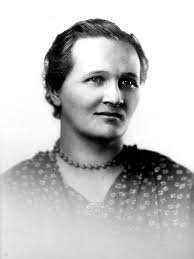
The volume and impact of discoveries Barbara McClintock has produced in the field of cytogenetics since the 1930s can not be overstated. Alongside extensive and meticulous experimental proof and innovative hypotheses, she is most notably credited for the discovery of mobile elements - transposons, ‘jumping genes’. Yet, throughout her career McClintock faced rejection and dismissal because she was literally ahead of her time, in both her identity as a female scientist and with her discoveries. Despite this friction, she maintained a love for scientific discovery and continued her research, until she was finally recognised over 40 years later.
McClintock began her prosperous career majoring in Biology at Cornell College of Agriculture, and earned her Masters in cytogenetics and a PhD in Botany by 1927. Here she began working with the subject of her entire career: Zea mays, maize or corn. In 1931, with Harriet Creighton, McClintock gave the first experimental proof for TH Morgan’s hypothesis of the physical crossing over of chromosomes contributing to genetic crosses. After leaving a Guggenheim fellowship in 1933 due to the rise of Nazism in Germany, McClintock was denied professorship at Cornell purely due to her gender, despite her already extensive achievements. In 1941 she moved to Cold Spring Harbor Laboratory, where she remained for the rest of her career, working on her most applauded discovery of transposable elements (Encyclopaedia Britannica, 2025).
Transposable elements, or transposons, are sections of DNA with the ability to move to and from different chromosomes. Most use a ‘cut and paste’ mechanism, encoding a transposase enzyme, which recognises short sections of DNA at the ends of the transposon called tandem inverted repeats, binds to these, and inserts them and everything between them into a random new location (Litwack, 2018). Since McClintock’s discovery, transposons have been proved essential to the function of almost every organism, and simultaneously potentially deadly to every organism. Approximately 50% of the human genome is made up of transposable elements, and up to 90% of the maize genome that McClintock studied (Pray, 2008). They can also be the vector by which genes for antibiotic resistance transfer between bacterial populations, by jumping between bacterial genomes as they are shared, without the need for transcription (Babakhani, S. & Oloomi, M., 2018). Insertion of a transposon within a region regulating gene activity can lead to overactivity of a gene, causing various types of aggressive cancers, or underactivity, leading to cell dysfunction (Dong, W. et al., 2025). Our fundamental understanding of the mechanism of these processes would be nonexistent without the work of McClintock, which began with her study of maize variegation.
Rollins Emerson, who McClintock assisted at Cornell, had previously suggested that the variegation of maize kernels, where they appear white with small spots of purple or brown, was due to an ‘unstable mutation’ that could revert back to its pre-mutated phenotype. McClintock proved that this instability was in fact due to two interacting transposable elements named Ds and Ac. The basic mechanism controlling kernel colouration has alleles leading to purple or brown pigment, and alleles either allowing or blocking colouration. All of these combinations should result in monochrome kernels, but the movement of a transposon named ‘dissociation’ (Ds), controlled by an independent transposon ‘activator’ (Ac), can block pigment formation by inserting into any of these genes, and reactivate by excising from the gene (Pray, L. & Zhaurova, K., 2008). Through extensive rounds of crossing maize plants and analysing their offspring, McClintock proved that “one cell gained what the other cell lost” (Keller,1983).
After years of diligent work to prove her theory, McClintock expected support from the others in her field who had previously respected her. Yet, when first presenting her proof of transposable elements in 1951, she was met with skepticism and dismissal. Not only did her peers not believe that transposable elements applied to all organisms, and weren’t just a quirk of Zea mays, they rejected McClintock’s views inherently because of competitive division within the field. McClintock had aligned herself with a faulty theory of chromosome function proposed by the contrarian geneticist Richard Goldschmidt, and therefore was dismissed by those who opposed his view (CSHL Archives 2012). Although Goldschmidt was incorrect, McClintock was not, but couldn’t access an open mind to consider her theories. For years she continued to provide successive papers and experiments supporting her theory, and was continually ignored. Eventually, she ceased publishing and lecturing on the subject, instead simply continuing her research independently at the Cold Spring Harbor Laboratory. During this period, she found she ‘truly enjoyed not being required to defend her interpretations. She could just work with the greatest of pleasure’ (Nobel Prize Outreach, 2026).
It was not until the 60s when genetic material was discovered to be made up of DNA, and the structure of chromosomes was truly understood, that McClintock’s work was reconsidered. Vindication in her work with the progression of molecular biology was also followed by a series of awards and 15 honorary doctorates. Most famously, McClintock was awarded a Nobel Prize in Physiology or Medicine in 1983 “for her discovery of mobile genetic elements” (Nobel Prize Outreach, 2026). She remains the only female scientist to receive this prize independently to this day. McClintock’s resilience and trust in her own work was powered by a love for discovery, and ultimately resulted in a seat at the table of universally lauded scientists.
Works Cited
Encyclopaedia Britannica, Inc. (2025) Barbara McClintock, Encyclopaedia Britannica. Available at: https://www.britannica.com/biography/Barbara-McClintock (Accessed: February 25, 2026).
Litwack, G. (2018) “Nucleic Acids and Molecular Genetics,” Human Biochemistry. Elsevier, pp. 300–301. Available at: https://doi.org/10.1016/b978-0-12-383864-3.00010-7.
Pray, L.A. (2008) “Transposons: The jumping genes.,” Nature Education [Preprint], 1(1):204. Available at: https://www.nature.com/scitable/topicpage/transposons-the-jumping-genes-518/ (Accessed: February 25, 2026).
Babakhani, S. & Oloomi, M. (2018) “Transposons: the agents of antibiotic resistance in bacteria,” Journal of Basic Microbiology, 58(11), pp. 905–917. Available at: https://doi.org/10.1002/jobm.201800204.
Dong, W. et al. (2025) “Transposons disrupt genomic stability and trigger cancers,” Frontiers in Cellular and Infection Microbiology, 15. Available at: https://doi.org/10.3389/fcimb.2025.1704405.
Pray, L. & Zhaurova, K. (2008) Barbara McClintock and the discovery of jumping genes (transposons). Nature Education, 1(1):169. Available at: https://www.nature.com/scitable/topicpage/barbara-mcclintock-and-the-discovery-of-jumping-34083/ (Accessed: February 25, 2026).
Keller, E.Fox. (1983) A feeling for the organism : the life and work of Barbara McClintock. 10th Anniversary Ed. W.H. Freeman.
CSHL Archives (2012) Barbara McClintock, McClintock Collection. New York. Available at: https://www.cshl.edu/personal-collections/barbara-mcclintock/ (Accessed: February 25, 2026).
Nobel Prize Outreach (2026) Barbara McClintock. NobelPrize.org. Wed. 25 Feb 2026. Available at: https://www.nobelprize.org/stories/women-who-changed-science/barbara-mcclintock/ (Accessed: February 25, 2026).