Can a Tumour Have a Personality?
Why seemingly identical cancers behave differently, and what that means for personalised medicine.
– 6 min read
Why seemingly identical cancers behave differently, and what that means for personalised medicine.
By Pola Czyblis
Same diagnosis, different fates
Two people can receive the same cancer diagnosis, carry the same mutation, and receive the same treatment. One may watch their tumour shrink, while the other sees it survive, return, or spread.
If the diagnosis is the same, why can the disease behave so differently?
Perhaps the problem begins with the diagnosis itself. We tend to talk about cancer as though it were a single, identifiable thing: lung cancer, breast cancer, bone cancer. But a diagnosis gives us a name, not the whole story.
After all, a name is not enough to know a person. We learn who someone is through their characteristics, surroundings, experiences, and, perhaps most importantly, how they respond when circumstances change.
Could the same apply to a tumour?
This question lies at the heart of personalised medicine: if cancers sharing a diagnosis can behave differently, treatment must account for what makes each tumour unique. The challenge is that a tumour is far more complex than its label suggests.
The tumour you thought you knew
A name is not enough to define a tumour, just as it is not enough to define a person. To understand its biological “character”, we need to look beneath the diagnosis.
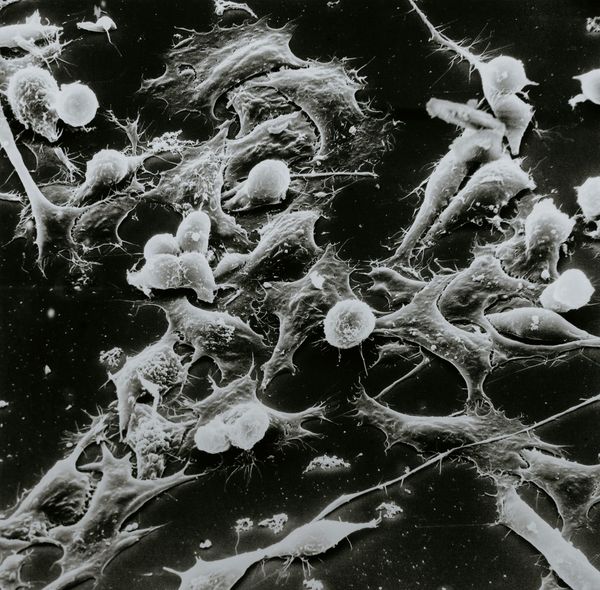
Under a microscope, a tumour is not one uniform mass but a population of cells with different genetic changes and biological states, surrounded by other cell types and molecular signals. This diversity, known as intratumour heterogeneity, means that even cells within the same tumour can behave differently: some may be sensitive to a drug, while others can survive it. Consequently, two tumours carrying the same cancer-associated mutation can respond very differently to the same treatment (Laisné et al., 2025; Wan et al., 2026).
The mutation recorded in a patient’s medical notes captures only one part of a tumour’s identity. However, our identities are influenced not only by what we are born with, but also by where we live – and tumours are no different.
The company it keeps
A tumour does not exist in isolation. Its surroundings, collectively known as the tumour microenvironment, include immune cells, blood vessels, connective tissue, and molecular signals. These neighbours influence cancer growth, immune interactions, and treatment response (Wan et al., 2026).
The environment does more than simply surround a tumour; it helps shape it. As a tumour grows, oxygen and nutrient supplies change, the immune system responds, and treatment introduces new pressures. Cells better adapted to these conditions gain an advantage (Wan et al., 2026).
So, a tumour’s character is not determined once and for all. It is shaped by the world around it and by what happens to it.
And that brings us to one of biology’s most important ideas: evolution.
What happens to a tumour changes it
Many of us first encounter evolution through natural selection: individuals within a population vary, and those better suited to their environment are more likely to survive and reproduce.
Cancer follows a similar principle.
As tumour cells acquire genetic and non-genetic changes, some become better equipped to survive than others. Environmental pressures, particularly treatment, determine which cells thrive and which disappear. A drug may eliminate sensitive cells while sparing resistant ones, which can then multiply. As a result, the tumour that returns may differ biologically from the one first diagnosed (Greaves & Maley, 2012).
Treatment does not simply act on cancer; it can help shape which cancer survives.
In this sense, a tumour has something resembling a history. Its present state reflects not only its original composition, but also the environments and pressures it has encountered. The cancer we treat today may already have been changed by everything that happened to it yesterday (Caravagna et al., 2026).
This evolutionary perspective has become central to modern research and is key to understanding UCL’s TRACERx programme, which tracks lung cancers over time to investigate how tumour diversity influences treatment resistance and relapse. Led by Charles Swanton, the programme’s pioneering work earned him the Sjöbergs Prize in February 2026 (Frankell et al., 2023; UCL, 2026).
But this raises a challenge for personalised medicine: how do you personalise treatment for something that will not stay the same?
The problem with taking a picture
A biopsy gives doctors a small piece of the tumour to analyse for its genetic and molecular characteristics. Yet a tumour may be far larger and more diverse than the sample removed. Research from the TRACERx lung cancer study found that, in around 30-40% of tumours, prediction of cancer behaviour could differ depending on where the biopsy was taken (Biswas et al., 2019; Biswas et al., 2025).
It is a little like thinking you know someone because you have met them in class. You might know how they behave in a seminar, but not that they play basketball every weekend, stress-bake before exams, or plan to move abroad. The version you have seen is real, but incomplete.
A biopsy presents a similar problem for cancer, with one crucial difference: while your classmate is unlikely to become a fundamentally different person between lectures, a tumour can change substantially over time.
New approaches aim to move beyond a single snapshot. Single-cell and spatial technologies reveal differences between individual tumour cells and their surroundings, while liquid biopsies can monitor tumour-derived material repeatedly and less invasively. These methods bring us closer to understanding a tumour as it changes, rather than observing it just once (Pantel et al., 2026).
So, does a tumour have a personality?
Yes and no.
If personality means thoughts, intentions, preferences or consciousness, then obviously not. A tumour does not decide to resist treatment – its apparent behaviour emerges from cellular variation, interactions with its environment and evolutionary pressures.
But if personality describes what makes something distinct – its characteristics, surroundings, history and response to experience – the comparison becomes surprisingly useful.
A tumour has its own cellular composition. It exists within a particular environment. It carries the record of what it has been through and can change in response to what happens next- this is its character.
That character helps explain why seemingly similar cancers can follow very different courses, and why a tumour’s response to treatment may change over time. Personalised medicine seeks to account for these differences, matching therapies to the biology of an individual’s cancer. As our understanding deepens, the challenge is to understand not only what makes each tumour distinct, but also how it may evolve.
After all, getting to know a person is not a one-time event. Why should getting to know a tumour be?
References
Biswas, D., Birkbak, N. J., Rosenthal, R., Hiley, C. T., Lim, E. L., Papp, K., Boeing, S., Krzystanek, M., Djureinovic, D., La Fleur, L., Greco, M., Döme, B., Fillinger, J., Brunnström, H., Wu, Y., Moore, D. A., Skrzypski, M., Abbosh, C., Litchfield, K.,…Consortium, T. (2019). A clonal expression biomarker associates with lung cancer mortality. Nature Medicine, 25(10), 1540–1548. https://doi.org/10.1038/s41591-019-0595-z
Biswas, D., Liu, Y.-H., Herrero, J., Wu, Y., Moore, D. A., Karasaki, T., Grigoriadis, K., Lu, W.-T., Veeriah, S., Naceur-Lombardelli, C., Magno, N., Ward, S., Frankell, A. M., Hill, M. S., Colliver, E., de Carné Trécesson, S., East, P., Malhi, A., Snell, D. M.,…Consortium, T. (2025). Prospective validation of ORACLE, a clonal expression biomarker associated with survival of patients with lung adenocarcinoma. Nature Cancer, 6(1), 86–101. https://doi.org/10.1038/s43018-024-00883-1
Caravagna, G., Graham, T. A., & Sottoriva, A. (2026). A guide to understanding tumour evolution through the lens of population genetics. Nature Reviews Cancer. https://doi.org/10.1038/s41568-026-00973-5
Frankell, A. M., Dietzen, M., Al Bakir, M., Lim, E. L., Karasaki, T., Ward, S., Veeriah, S., Colliver, E., Huebner, A., Bunkum, A., Hill, M. S., Grigoriadis, K., Moore, D. A., Black, J. R. M., Liu, W. K., Thol, K., Pich, O., Watkins, T. B. K., Naceur-Lombardelli, C.,…Consortium, T. R. (2023). The evolution of lung cancer and impact of subclonal selection in TRACERx. Nature, 616(7957), 525–533. https://doi.org/10.1038/s41586-023-05783-5
Greaves, M., & Maley, C. C. (2012). Clonal evolution in cancer. Nature, 481(7381), 306–313. https://doi.org/10.1038/nature10762
Laisné, M., Lupien, M., & Vallot, C. (2025). Epigenomic heterogeneity as a source of tumour evolution. Nature Reviews Cancer, 25(1), 7–26. https://doi.org/10.1038/s41568-024-00757-9
Pantel, K., Masmoudi, D., & Alix-Panabières, C. (2026). Towards liquid biopsy-based analysis of antitumour immunity. Nature Reviews Clinical Oncology, 23(10), 766–791. https://doi.org/10.1038/s41571-026-01181-8
UCL. (2026). UCL cancer researcher wins international prize for pioneering tumour work. Retrieved 06.10.2026 from https://www.ucl.ac.uk/news/2026/feb/ucl-cancer-researcher-wins-international-prize-pioneering-tumour-work
Wan, J. C. M., McGranahan, N., & Swanton, C. (2026). Charting intratumor heterogeneity from bench to bedside. Nature Cancer, 7(8), 1176–1188. https://doi.org/10.1038/s43018-026-01198-z