Beyond a Name: Mary Somerville and the Meaning of “Scientist”
Revisiting the life and work of Mary Somerville to reflect on how the meaning of “scientist” has been developed and evolved through time.
– 4 min read
Revisiting the life and work of Mary Somerville to reflect on how the meaning of “scientist” has been developed and evolved through time.
By Ivy Qi
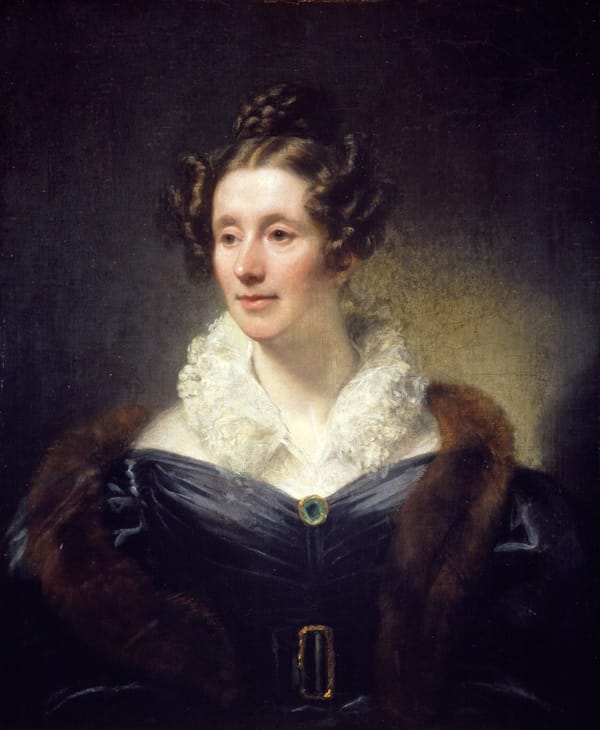
If Mary Somerville were publishing her work today, she would be recognised without hesitation as a scientist. Yet in 1834, when the word itself was only just introduced, she was explicitly excluded from the group. Despite her experimental research, mathematical authority and sweeping synthesis of the physical sciences, she was not granted that title.
Born in 1780, Somerville received the conventional education considered suitable for a young lady of her social standing - music, drawing and other accomplishments. It did not satisfy her. Driven by intellectual curiosity, she began teaching herself mathematics in secret, studying algebra and geometry far beyond what was expected of women at the time from fashion magazines. That private determination soon developed into serious scientific work. (Secord, 2018)
In 1826, she published On the Magnetizing Power of the More Refrangible Solar Rays, reporting carefully controlled experiments investigating whether ultraviolet light could magnetise steel needles. The study combined experimental precision with theoretical reasoning - an approach entirely recognisable as scientific today. Her 1831 Mechanism of the Heavens went even further. More than a translation of Laplace, it offered a demanding mathematical exposition of celestial mechanics and became a standard university text, strengthening British mathematical astronomy. Three years later, On the Connexion of the Physical Sciences brought together developments in astronomy, physics, chemistry and geography, arguing that natural laws formed an interconnected whole. Rather than narrowing knowledge into isolated specialties, the book emphasised coherence across disciplines.(Somerville, 1826, 1831, 1849)
By modern standards, such work is unmistakably scientific.
Yet when William Whewell reviewed "On the Connexion of the Physical Sciences" in 1834, he concluded that Somerville was not a “scientist” but a “natural philosopher”. In his view, this was praise. The natural philosopher pursued knowledge broadly and independently, guided by intellectual interest rather than professional ambition.(Whewell, 1834) The newly emerging figure of the “scientist,” by contrast, was associated with increasing specialisation and a developing professional identity.
It was true that from other perspectives, Somerville held an identity being closer to a natural philosopher. However, from our perspective, the judgement still feels striking. If her experimental research, mathematical mastery and conceptual ambition seem entirely scientific to us, the contrast invites reflection. What did the word “scientist” imply at its birth?
In its early formation, the identity of the “scientist” was shaped not only by methods of inquiry but also by social imagination. The common phrase of the period was “men of science.” Scientific authority was intertwined with expectations about gender and social standing. The ideal investigator was implicitly male and situated within particular intellectual networks. Respectability and independence - often linked to gentlemanly status - formed part of the image of scientific credibility. Access to advanced education and formal recognition was far from evenly distributed. (Fara, 2009)
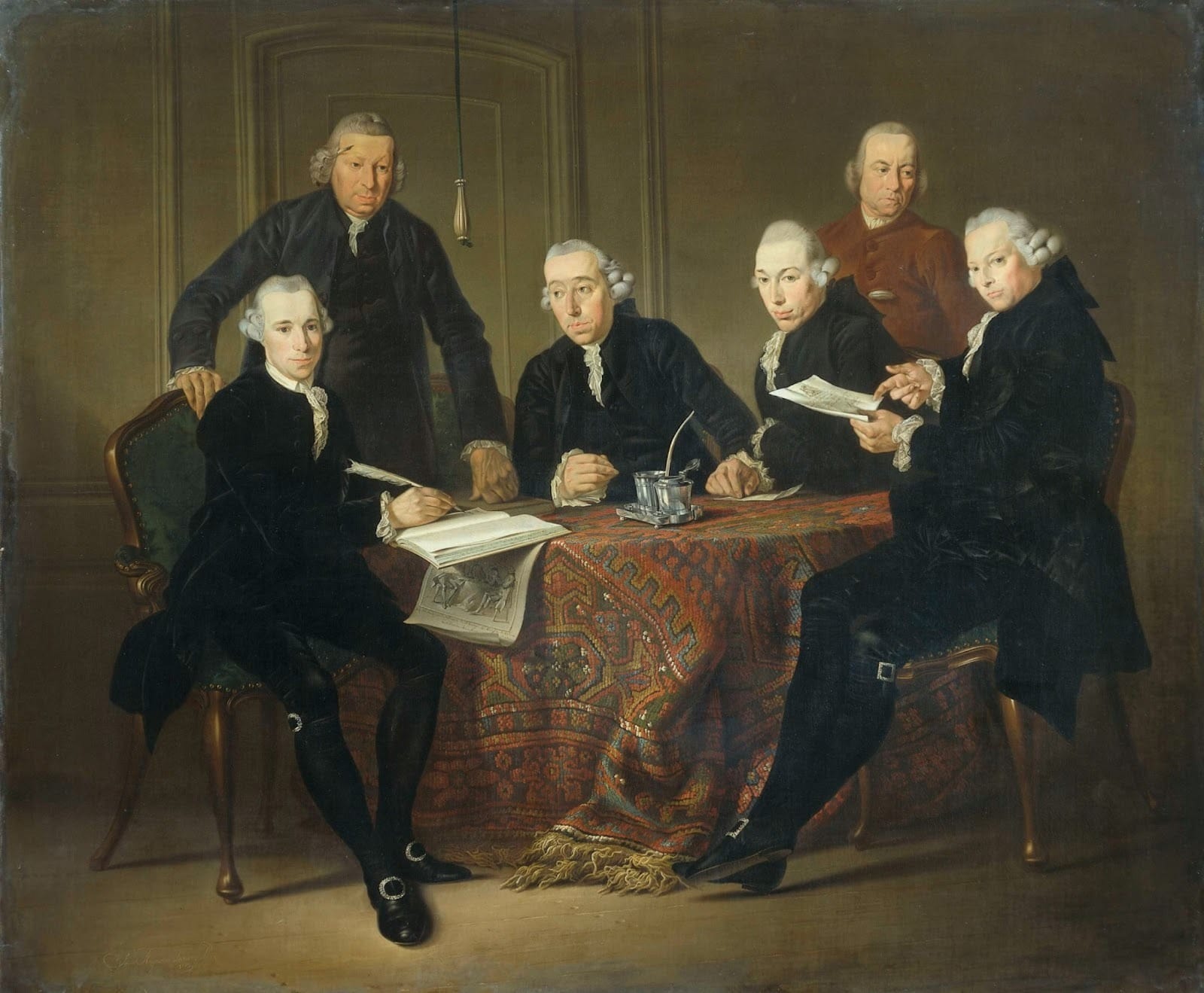
The issue, therefore, was never that Somerville lacked scientific ability. It was that the emerging category of “scientist” carried intellectual and social assumptions that did not readily include women, and that were closely connected to class as well as gender.
Somerville’s presence quietly strained those assumptions. Her achievements demonstrated that rigorous experiment, advanced mathematics and sweeping theoretical synthesis were not confined to a single social type. At the same time, she supported broader access to education and intellectual participation, believing that scientific knowledge should not be restricted by gender or background. Through her writing, she made complex mathematics accessible beyond narrow specialist circles. (Holmes, 2014; Secord, 2018)
Her influence even extended through mentorship. Among those she encouraged was Ada Lovelace. In her notes on Charles Babbage’s Analytical Engine, Lovelace described how a machine could follow symbolic instructions to perform operations—articulating what is now recognised as one of the first computer algorithms. The intellectual discipline fostered in Somerville’s circle formed part of that remarkable development. (Schiebinger, 1988)
Mary Somerville did not argue about labels. She calculated, experimented, translated and connected fields that others treated separately. Through the quality of her work, she demonstrated that intellectual authority was not confined to a single gender or social position.
Over time, the word “scientist” came to include figures like her. That change did not happen all at once, nor without resistance. But it followed from the steady presence of individuals whose achievements could not be overlooked.
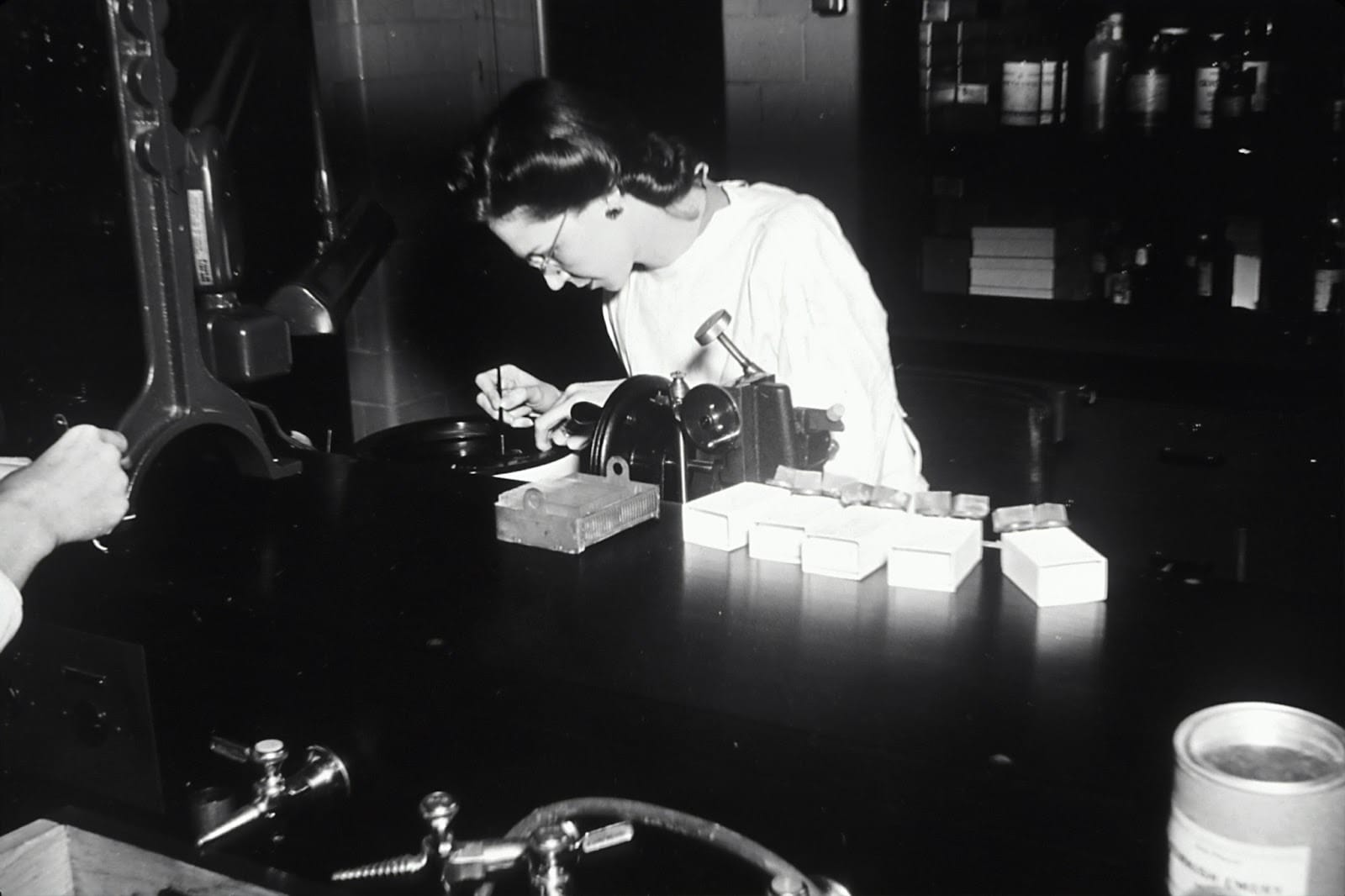
To recognise Mary Somerville today is not simply to correct a historical classification. It is to acknowledge how science learns to embrace those who shape it. Her legacy lies not only in her discoveries, but in the space she helped create for others to belong.
Reference:
Fara, P. (2009) Science; A Four Thousand Year History. Oxford: Oxford University Press.
Holmes, R. (2014) ‘In Retrospect: On the Connexion of the Physical Sciences’, Nature, 514, pp. 432–433. Available at: https://doi.org/10.1038/514432a.
Schiebinger, L. (1988) ‘Feminine Icons: The Face of Early Modern Science’, The University of Chicago Press, 14, pp. 661–691. Available at: https://doi.org/10.1086/448461.
Secord, J. (2018) ‘Mary Somerville’s vision of science’, Physics Today, 71(1), pp. 46–52. Available at: https://doi.org/10.1063/PT.3.3817.
Somerville, M. (1826) ‘On the Magnetizing Power of the More Refrangible Solar Rays’, Philosophical Transactions of the Royal Society of London, 116, pp. 132–139.
Somerville, M. (1831) Mechanism of the Heavens. London: J. Murray.
Somerville, M. (1849) On the Connexion of the Physical Sciences. 9th edn, https://www.gutenberg.org/files/52869/52869-h/52869-h.htm. 9th edn. John Murray.
Whewell, W. (1834) ‘Review of On the Connexion of the Physical Sciences by Mary Somerville’, The Quarterly Review, 51(101), pp. 54–68.