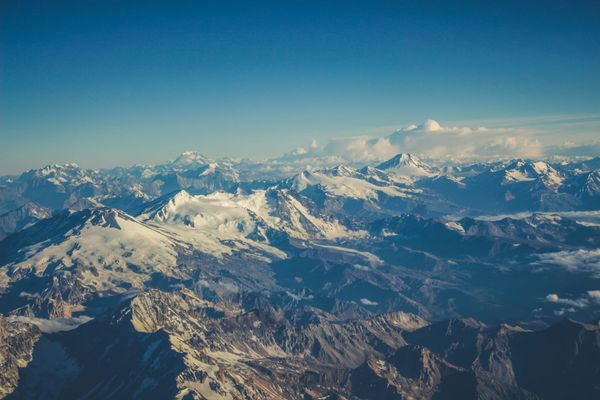
High in the Peruvian Andes, communities have worshipped their glaciers for generations. Known locally as apus – mountain deities – these vast ice masses have long been more than a water source. But the glaciers are shrinking so quickly that some communities can no longer reach them to perform their rituals. Their gods, quite literally, are disappearing.
“Indigenous communities in the tropical Andes are changing their religious practices,” says Dr Jeremy Ely, a glaciologist at the University of Sheffield who studies glacier changes across the region. “The apus are retreating beyond reach.”
A year after 2025 – the United Nations International Year of Glaciers’ Preservation – and the timing could not be more urgent. A wave of major scientific findings confirms what many researchers have long feared: the world’s glaciers are melting faster than at any point in recorded history, with the Andes losing ice at 35% above the global average. For the nearly 90 million people who depend on Andean glacial meltwater for drinking, farming and survival, the consequences are not a distant scenario. They are already here.
A Crisis in Numbers
In February, a landmark study published in the journal Nature brought together 35 international research teams in an effort called GlaMBIE – the Glacier Mass Balance Intercomparison Exercise. Their combined data revealed that glaciers worldwide have been losing an average of 273 billion tonnes of ice per year since 2000, with the rate accelerating sharply over the past decade.1 To grasp the scale, glaciologist Michael Zemp, who coordinated the study, observed that the ice lost in a single year amounts to what the entire global population consumes in water over thirty years.
The World Meteorological Organisation, reporting in the same period, found that 2022 to 2024 marked the largest three-year mass loss from glaciers ever recorded.4 Meanwhile, the US National Oceanic and Atmospheric Administration confirmed that Arctic winter sea ice in March 2025 reached its lowest annual extent in the entire 47-year satellite record.2 Together, they point to the same conclusion: the systems that have regulated mountain water for centuries are being dismantled at a pace that no community was built to absorb.
For the Andes – home to more than 99% of all tropical glaciers on Earth – the picture is particularly stark. The Deplete and Retreat project, a four-year UK Government-funded research initiative involving teams from the universities of Sheffield and Newcastle and Imperial College London, found that Andean glaciers are thinning at approximately 0.7 metres per year, some 35% faster than the global average.3 Since the Little Ice Age, roughly 350 years ago, the tropical Andes has lost around 56% of its glacier area. Under high emissions scenarios, almost all tropical Andean glaciers could be gone entirely by 2100.
“Most glaciers in Peru and the tropical Andes will be lost,” says Ely, with the quiet matter-of-factness of someone who has spent years looking at the same data. “The question now is how communities adapt.
A System Under Pressure
To understand why this matters so urgently to so many people, it helps to think of glaciers as giant, slow-release reservoirs. In the Andes, they store water as ice throughout the wet season and release it steadily as meltwater during the dry months – months when rain is scarce and mountain communities depend entirely on what the ice gives back. Remove that store, and the rhythm of survival breaks down.
Dr Rike Becker, a hydrologist at Imperial College London, describes the mechanics clearly. “If precipitation falls as rain instead of snow, it runs off immediately. You lose the buffer,” she says. “In drought years, when you have no rain and no ice melt, communities have nothing.” Becker’s work within the Deplete and Retreat project sits at the point where climate and glacier modelling meet real human impact: her hydrological simulations translate raw scientific projections into what future water availability will look like on the ground.
What those models increasingly show is greater variability in water supply, more extreme dry seasons, and the looming reality of what scientists call peak water – the point at which glacial meltwater output reaches its maximum before permanently declining, as ice masses shrink too far to sustain the flow.
“In some catchments in the Cordillera Blanca, we have likely already passed that point,” says Professor Mathias Vuille, a climate scientist at the University at Albany who has studied the Andes for more than thirty years. His 2006 paper in the journal Science first raised a formal warning about threats to water supply in the tropical Andes. It predicted that as smaller, lower-lying glaciers disappeared entirely, communities dependent on dry-season meltwater would face increasingly severe shortfalls – a prediction that has since been borne out across the Cordillera Blanca. Nearly twenty years on, he says the projections proved broadly accurate – and in places, too conservative.
When the Water Changes
For Dr Fabian Drenkhan, a hydrologist at the Pontificia Universidad Católica del Perú who has lived and worked in Lima for sixteen years, the science is not an abstraction – and neither is the warning against reducing it to a single cause.
“Water security is not only about how much water is physically available,” he says. “It is quantity and quality, but also governance, access, and management.” Lima, home to twelve million people, faces water pressures driven primarily by population growth and inefficient distribution – not glacier retreat. But in the highlands, closer to the ice, the dynamics are very different.
Some Andean rivers are turning visibly orange and red – a process called natural acid rock drainage. When glaciers retreat, they expose bedrock rich in sulphide minerals. When those minerals meet air and water, they oxidise, making rivers acidic. The process is entirely natural, but the pace at which it is occurring has accelerated dramatically because of how fast the ice is disappearing. “Within a few years,” says Drenkhan, “rivers have changed from normal drinking conditions to water which is not drinkable anymore.”
Further up in the highlands, the farming and herding communities closest to the ice are watching traditional coping strategies fail. Grazing land is drying out. Seasonal water that once arrived reliably during the driest months is becoming unpredictable. “People are suffering,” says Vuille. “We need to adapt, and we need to help them adapt.”
The Sponges of the Andes
What makes the Andean situation distinctive is that the communities facing the sharpest consequences of glacier loss are not without resources. For centuries, Andean cultures developed sophisticated techniques for managing water scarcity – many of which remain viable today, if given proper support.
Drenkhan describes two in particular. Kochas are small stone-lined reservoirs that capture seasonal rainfall for use in dry months. Amunas are ancient infiltration canals that carry water from high catchments and allow it to percolate slowly into the ground, recharging aquifers that resurface as natural springs downstream weeks or months later. Both are pre-Inca in origin. “When you come to communities and say you want to work with ancestral knowledge, people listen,” he says. “It is part of their culture.” He contrasts this with large top-down engineering projects – dams and reservoirs designed by outside consultants – which have repeatedly failed because they ignored what communities already knew.
Equally important are bofedales: high-altitude Andean peatland wetlands that Drenkhan describes as the sponges of the Andes. These ecosystems absorb water during the wet season and slowly release it through the dry months, buffering river flows in ways scientists are only beginning to quantify fully. Research by Drenkhan and colleagues found that bofedales contribute around 74% of total dry-season river flow in some headwater catchments – far more than previously understood.5 In practical terms, that means that for communities living downstream, these wetlands – not the glaciers themselves – are already the primary buffer between having water and not having it during the driest months of the year.
But there is a critical problem Drenkhan does not shy away from. Many of these interventions are being implemented without sufficient scientific understanding of whether, or how well, they work in each specific location. “We are sometimes implementing things and then looking to see what happens,” he says. “That is upside down.” The lack of hydrological data – on groundwater flows, seasonal dynamics, local conditions – means that well-intentioned solutions may be poorly targeted, and their real benefits remain unproven. It is adaptation driven by urgency rather than evidence, because there is no time and no funding for anything else.
Becker sees nature-based solutions as promising but underscores the same tension. “Local communities often know much better than scientists what needs to be done,” she says. “Sometimes our role is less about solving the problem and more about helping create the conditions for communities to act.”
Thirty Years of Warnings
In March 2025, Ely presented the Deplete and Retreat project’s policy brief at UNESCO in Paris, at the first ever World Day for Glaciers. He was struck by how different the experience felt from a scientific conference. “You have to give clear, concise messages,” he says, “and you have to repeat them.”
The frustration beneath that observation runs deep. The IPCC published its first assessment report in 1990. The Paris Agreement set targets in 2015. Glaciologists have been publishing specific warnings about the Andes for at least two decades. The gap between what the science demands and what governments are actually doing has not closed – it has widened.
Vuille spent thirty years watching that gap persist before founding the ACCORD network in 2024, supported by a grant from the US National Science Foundation. Its purpose is straightforward and striking in its admission: to finally coordinate Andean climate science groups that have, until now, operated in isolation from one another. “There has been no continuity, no coordination,” he says. “Different groups working in the same region, not talking to each other.”
Drenkhan points to a further layer of difficulty specific to Peru. Governments change. Ministers are replaced within months. Institutions meant to translate research into policy are destabilised by political instability. “It is very difficult to work in a long-term, continuous way here,” he says. “And that is one of the biggest shortcomings.”
It is also, as Ely notes, a matter of justice. “Developing countries in the inner tropics have contributed the least to climate change,” he says, “and they are experiencing some of its most severe effects.” Bolivia, for instance, has lost nearly half its glacier ice mass over the past fifty years, despite contributing a fraction of a percent of global cumulative emissions.
Reasons Not To Give Up
Becker, speaking from London, is deliberate about not ending in despair. Her models show what is coming, but her fieldwork has also shown her something else: communities across the Andes actively building solutions – small in scale but locally grounded, locally trusted, and locally enacted. “I think it is important not to give up. Communities are really active in finding answers.”
What ultimately gives her hope, she says, is simpler than any policy framework or research network. “The beauty of nature. And that we have to save it for our own survival.”
For Drenkhan, the message he most wants a British reader to take away is about distance – crucially, the absence of it. Peru exports vast quantities of food to Europe: vegetables, fruit, crops grown in valleys fed by these same vanishing glaciers. Consumer choices made in London supermarkets, he argues, are not as disconnected from the Andes as they appear. “By your consumption patterns,” he explains, “you determine the future of other regions. You are far away, but at the same time, you are not so far away at all.”
The glaciers of the Andes have served as water towers, spiritual guardians and climatic anchors for centuries. Their loss is not a Peruvian problem, or even an Andean one. It is, as Vuille puts it simply, “a symptom of a bigger issue” – a world warming faster than any of the communities built within it were designed to absorb. How urgently the rest of the world chooses to respond may determine whether the people closest to the ice have enough time to adapt.
This article is based on interviews with Dr Jeremy Ely, Dr Rike Becker, Professor Mathias Vuille, and Dr Fabian Drenkhan.
References
1. Hugonnet, R. et al. (GlaMBIE). Nature, February 2025. https://www.nature.com/articles/s41586-024-08545-z
2. NOAA Arctic Report Card 2025. https://arctic.noaa.gov/report-card/report-card-2025/
3. Ely, J. et al. Geophysical Research Letters, 2024. https://agupubs.onlinelibrary.wiley.com/doi/10.1029/2024GL109154
4. World Meteorological Organisation. State of Global Climate 2024. https://wmo.int/publication-series/state-of-global-climate-2024
5. Ross, N., Drenkhan, F. et al. Hydrological Processes, 2023. https://onlinelibrary.wiley.com/doi/full/10.1002/hyp.14940